The condition node
A fork in the road with two exits, decided by a CEL expression over the frame.
{
  "id": "confident",
  "type": "condition",
  "condition": "vars.score > 0.7 && vars.topic != 'billing'",
  "then": "answer",
  "else": "escalate"
}
- The expression is evaluated against the current frame and taken as a
boolean, so an empty string,
0and an empty list send execution downelseas surely asfalsedoes. thenis required.elseis not.- The node writes nothing to the frame — it only chooses. To carry a computed
value onwards, write it with a stage before the fork, or with
expose. - The
condition_evaluatedevent records what was decided:{"result": true, "next": "answer"}.
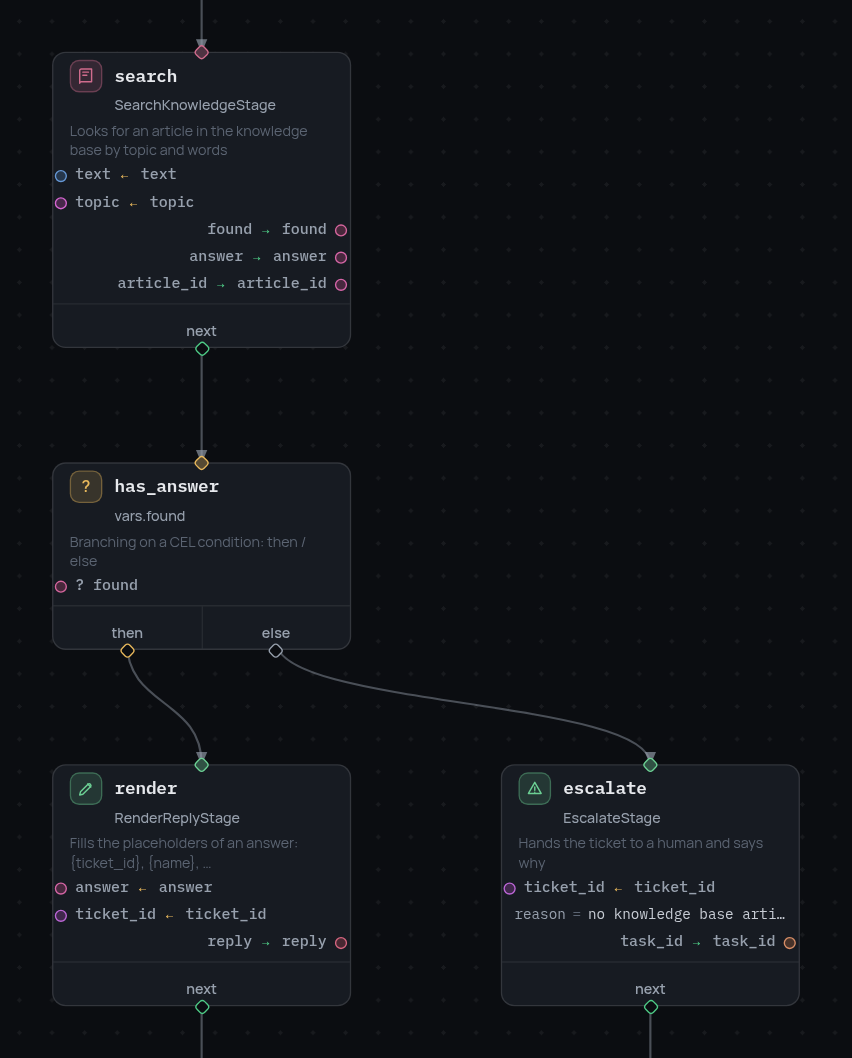
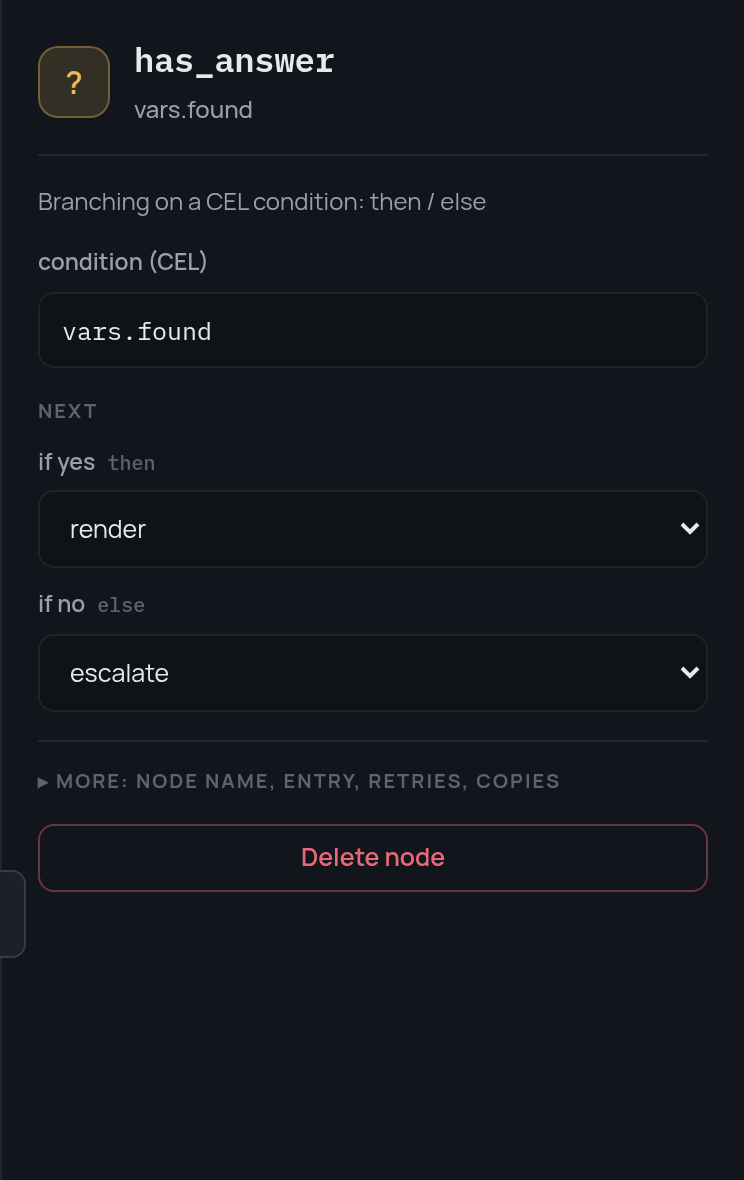
In the editor the variables the expression reads become data ports of the card, so a condition is not a black box on the canvas:
When the road ends
If the condition is false and there is no else, there is nowhere to go and
the run simply ends: no terminal was reached, so the
session returns result = null and no artifacts.
That is occasionally what is wanted — "nothing more to do here" — but far more
often it is a forgotten branch. When the end of a road is deliberate, say so
with a terminal: the result then states which end it was.