The switch node
Many roads out of one node. The cases are tried in the order they are
written and the first true one wins; default catches everything else.
{
  "id": "route",
  "type": "switch",
  "cases": [
    { "when": "vars.urgency == 'high'", "next": "page_a_human" },
    { "when": "vars.topic == 'billing'", "next": "to_billing" },
    { "when": "vars.topic == 'login'", "next": "to_support" }
  ],
  "default": "to_general"
}
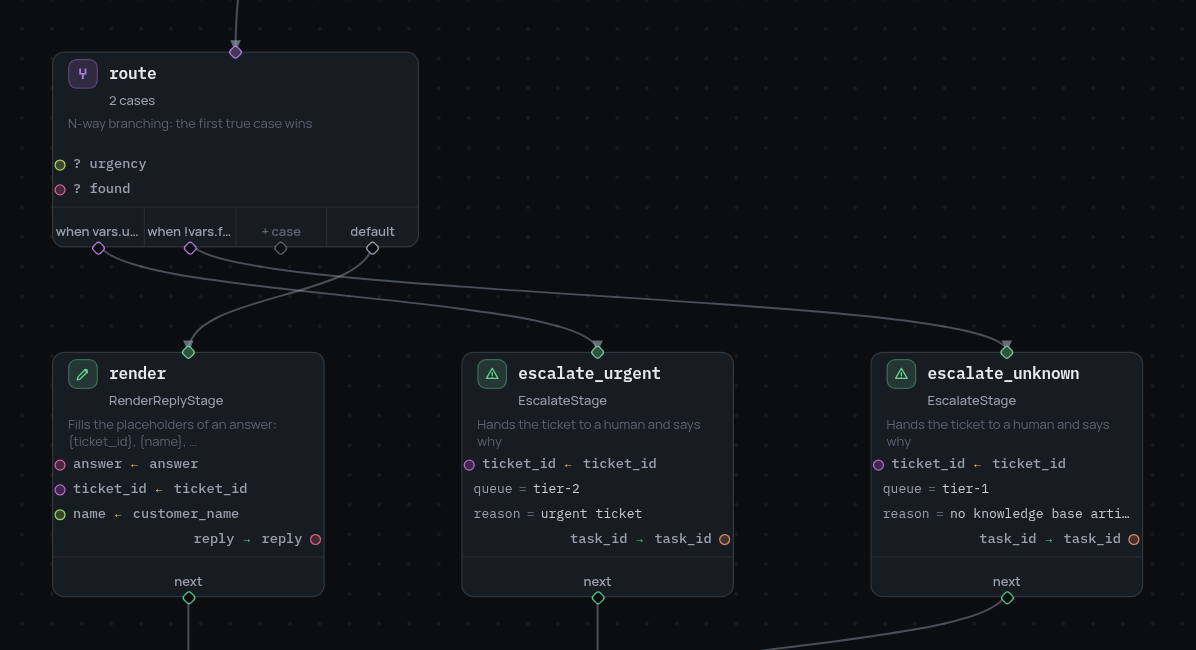
- Every case needs both
when(a CEL expression) andnext; a case missing either is a validation error. - Order is the priority. In the example above an urgent billing ticket goes to a human, because that case is written first — reorder the list and the same ticket goes to billing.
defaultis optional, and aswitchwrites nothing to the frame.- The
switch_evaluatedevent records which expression won and where it led:{"matched": "vars.topic == 'billing'", "next": "to_billing"}. When nothing matched,matchedisnull.
switch or condition?
Two exits are a condition — then/else reads better
than two cases and one of them negated. Use a switch from three roads
onwards, or when the cases are a list that will grow: adding a topic is then
one more line, not another nested fork.
When nothing matches
With no matching case and no default the run ends where it stands — no
terminal is reached, so the session returns
result = null and no artifacts. A default leading to a terminal that says
"unrecognised" is almost always better than a graph that quietly stops.